
The Ganso
Story
Beginnings
The creation of the TimeFrame was inevitable because, in many ways, it reflects who we are as friends, designers, and children of the 1980s. We grew up in Eastern Europe at a time when personal computers were just beginning to appear in homes. Our early memories are tied to machines like the Commodore 64, the Plus/4, the Amiga 500, admired only from a distance, arcade cabinets, and later MS-DOS PCs. The purple screen, the chiptune, the sharp pixels, the loading screens.
Our relationship with technology was direct. We configured systems, edited config files, adjusted hardware we had to. We experimented. We broke things and fixed them. We learned from our mistakes. Gergő used his pocket money to buy a co-processor for his 386SX. Occasionally he forgot to move the extra 4MB RAM module back from the gaming machine to his mother’s home office computer. Roland with a single move, relocated the MS-DOS system files into a folder because he found them messy. At the next reboot, he was in for a surprise.

Under tight technical limits, entirely new visual languages and a culture emerged. Pixel art was shaped by resolution. Memory and processing power constraints demanded discipline. Soundtracks were compressed into impossibly small spaces. Constraint was not a limitation; it was the framework within which creativity operated.
That period pulled us in completely. Experimenting, modifying, and eventually creating our own things felt like a natural continuation of learning the system.
Later, we both moved into professional design. We met while working at the same creative agency as digital designers. What connected us was a shared sensitivity to detail, proportion, and craftsmanship rooted in retro gaming. Over time our careers diverged, but our standards did not.
Early Experiments
Long before Ganso existed as a company, both of us had begun experimenting with display concepts independently. For Gergő, this exploration dates back at least to 2013 with the LOOP concept, an attempt to rethink how digital content is framed and experienced in physical space.

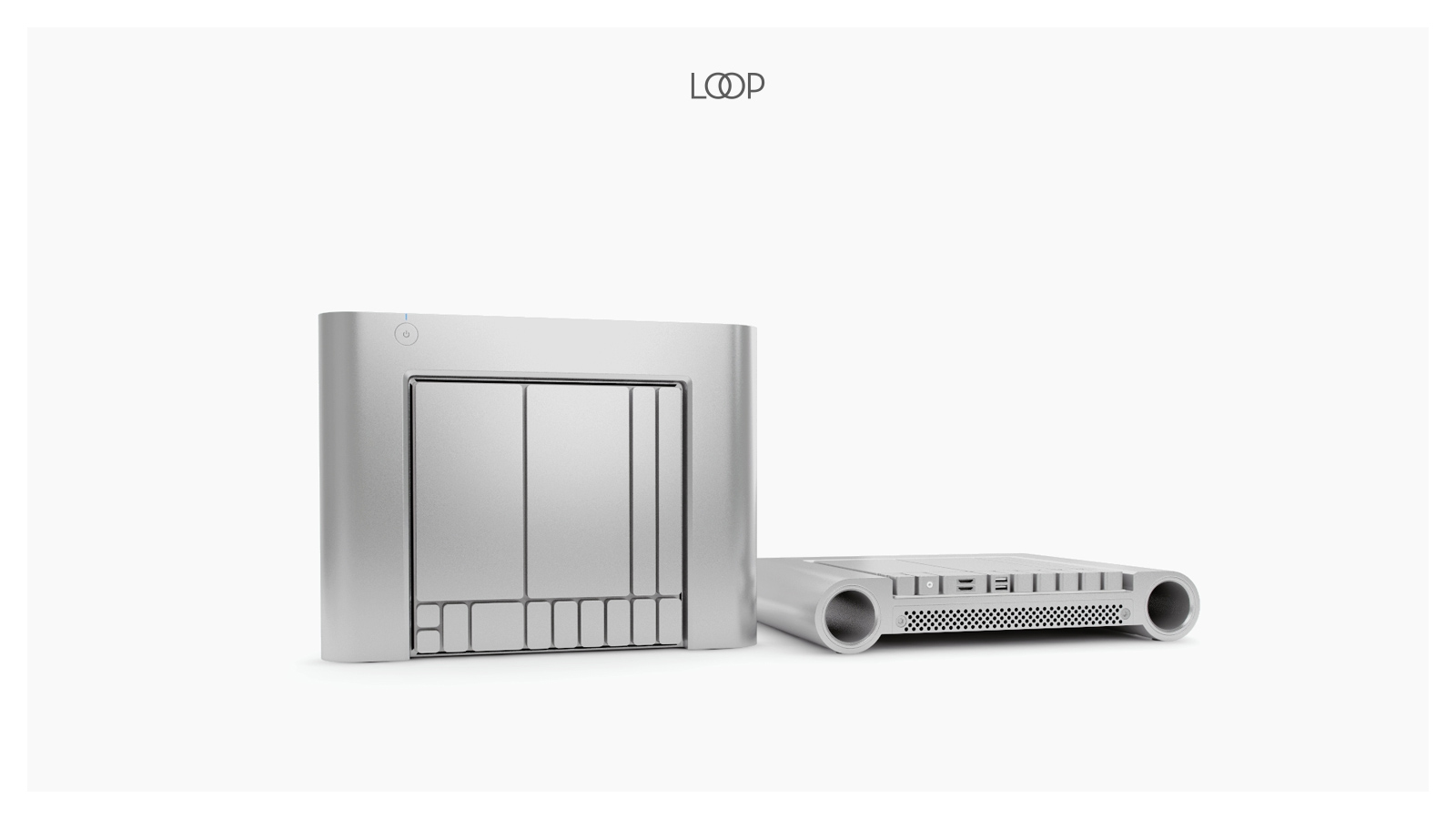
For Roland, projects such as CAPCOM TV ARCADE and later the PIXY Display approached similar questions from different visual angles. These were not commercial ventures. They were design investigations.


At that time, we were not trying to build a product together. We were each exploring something that felt unresolved.
Roland, a big fan of 1990s electronics, had been collecting old consoles, various displays, and CRT televisions for years. In his spare time, he experimented with and learned to use nearly all major software emulation systems, from FinalBurn Alpha to Batocera, as well as FPGA-based solutions, always trying to recreate an experience that felt truly authentic.
Yet no matter how carefully he configured the software, something always felt slightly off. The display the most dominant element of the setup never fully aligned with the content. At the same time, Gergő had exited a previous venture and reached a different kind of milestone. Professional stability was there, but something from the early career years was missing: the unfiltered creative exploration, the sense of building something slightly irrational but deeply meaningful.
Founding of Ganso
.png)

When we reconnected and began discussing our parallel experiments, it became clear that we were circling the same question. It was not only about retro games. We shared a similar respect for electronic objects from that era, Walkmans, hi-fi towers, early consoles devices that were engineered with quality, precision, weight and proportion. That shared attitude toward hardware inevitably led us back to the display.
Around September 2024, we reached a point where we acknowledged that this would not remain a private exploration. We decided to commit. Ganso emerged from that decision. Not as a nostalgia brand or as a reaction, but as the continuation of something that had been forming quietly for years.
The name Ganso originates from the Japanese word 幻想 (gensō), which carries deep, layered meanings: fantasy, illusion, imagined vision. It describes something that exists internally before it becomes material. We were drawn to that nuance. Ganso represents the act of bringing a long-held internal image into physical reality. Not as imitation, and not as spectacle, but as materialisation. The name also reflects values we respect: craftsmanship, discipline, restraint, and long-term thinking.
The TimeFrame
Specification
We knew that if we were serious, the first step was not design language but specification. We wanted to create a product whose first version would already stand at a high level. At the same time, we understood that hardware requires compromise awareness. The goal was not perfection in abstraction, but integrity in execution.
The choice of 1600×1200 resolution proved fundamental. It allows retro content to be represented with structural clarity, while remaining compatible with modern systems. Arcade machines commonly used 19” and 25” displays, and early 1990s household televisions were often around 50 cm. That physical scale defined the viewing experience. The 21.3” panel sits within that range and preserves proportional coherence. In a world accustomed to increasingly large displays, this dimension offers presence without excess. It allows smaller pixel-based systems to scale into a living-room context without distortion.
Product Design
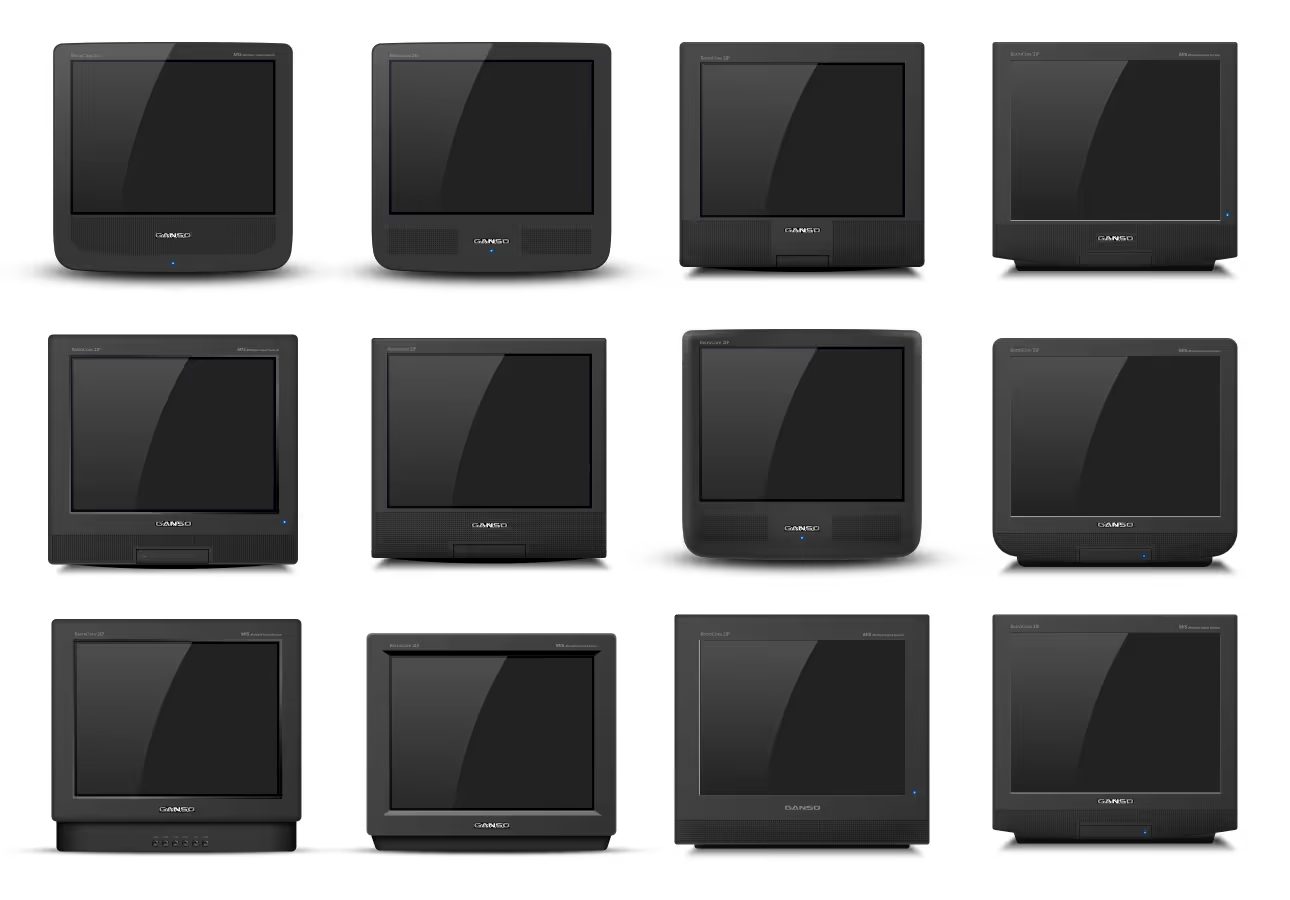
We wanted to create an object worthy of the content it presents. Retro games were not careless creations. Developers, pixel artists, sound designers and programmers worked under severe technical constraints, yet produced precise and intentional results. If we choose to revisit those works, the display that presents them should meet the same standard of seriousness. The display is the dominant element of the experience. It should not feel like an afterthought.
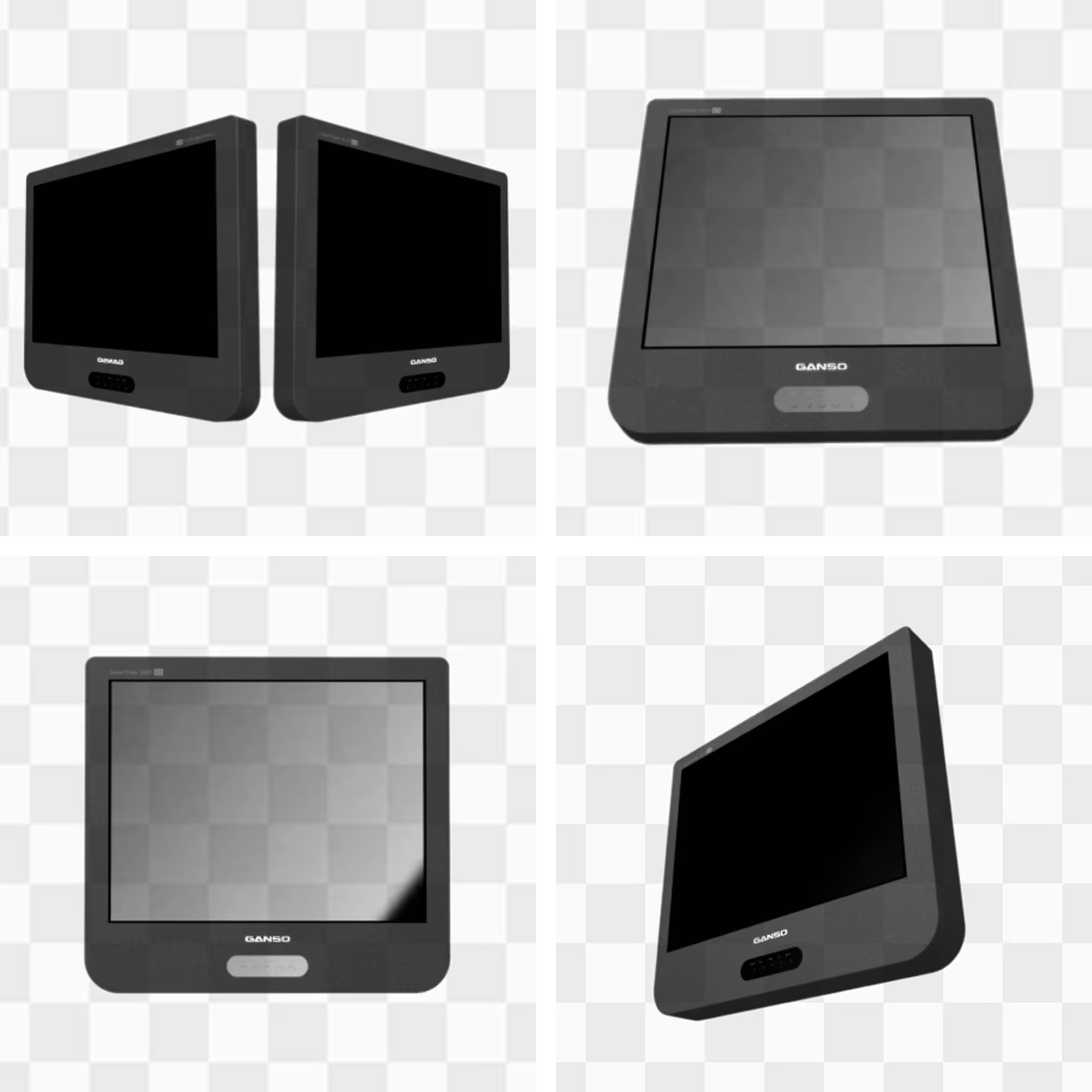
Our intention was to design an object that can stand confidently in a living space. Something you do not need to hide. Something that feels deliberate rather than improvised. The form language evolved through iteration. We moved early vector concepts into 3D modelling and physical prototypes. Approximately ninety percent of the original intent remained, but refinements occurred in proportion, edge treatment, material choices, and structural detailing. Through these iterations, what we now refer to as the Ganso design language began to take shape.
Prototypes
The prototype phase was the first true decision point. We had to determine whether this would remain a personal project or become a production-ready product. We chose to take it seriously.
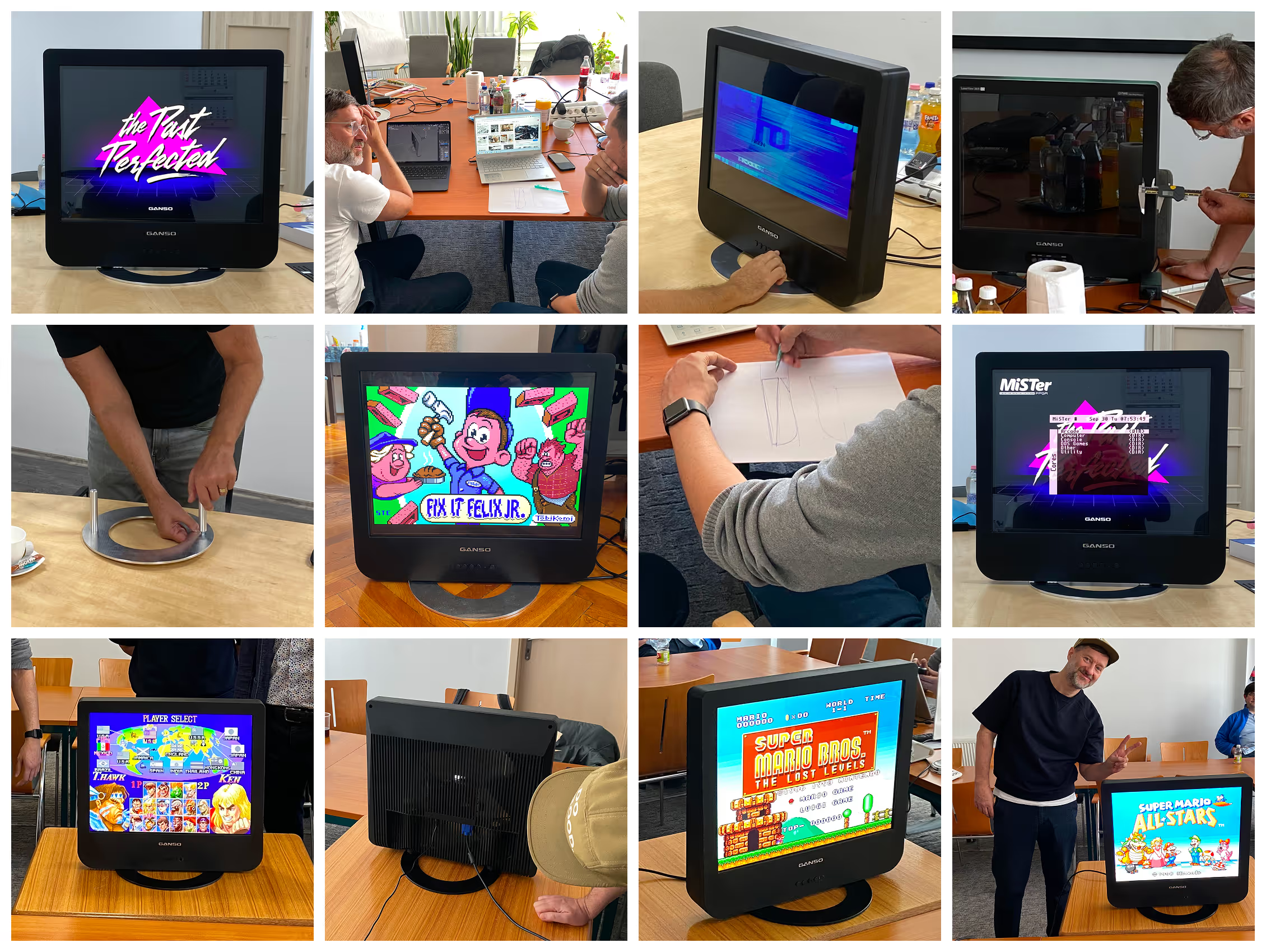
From the beginning, prototypes were fully functional. We wanted form and function to evolve together. Working with a manufacturing partner capable of supporting eventual mass production ensured that we were not designing an object detached from feasibility.
Each prototype introduced new constraints and new clarity. Mechanical tolerances, thermal behaviour, electronic integration, assembly logic these realities shaped the object as much as aesthetics did. It was a long process. Slow by startup standards, intentionally so. Each iteration sharpened not only the object, but our understanding of what Ganso represents.
TimeFrame 2105
Finding the name for the product required precision. We were not looking for something nostalgic or descriptive. We needed a term that expressed the structural idea behind the object. Time refers not simply to chronology, but to perception. The way experiences live in memory. The way certain digital moments remain vivid decades later. Frame refers to boundary. Structure. Proportion. A defined space that shapes perception. When combined, TimeFrame describes a bounded space in which time is experienced differently.
Certain digital experiences were created within specific structural conditions proportions, resolutions, physical distances, visual densities. When those conditions change significantly, the experience shifts as well. TimeFrame is our attempt to restore structural coherence between content and its physical presentation. You enter a frame. Within that frame, past experience becomes present again, because the conditions are aligned.
Production

Throughout development, we moved carefully. Part of this was personal. We wanted to enjoy the process. Another part was strategic. Certain elements required time to mature technically, conceptually, and emotionally. We delayed public communication until we felt confident that the direction was stable. There were detours. Some approaches were abandoned. Not every exploration needed to be visible.
What matters is that after two years of focused work, Ganso TimeFrame 2105 4:3 exists as a coherent object engineered, refined, and prepared for sharing with the world.
Two years of work. Forty years in the making.
Cheers,
Roland & Gergő


